
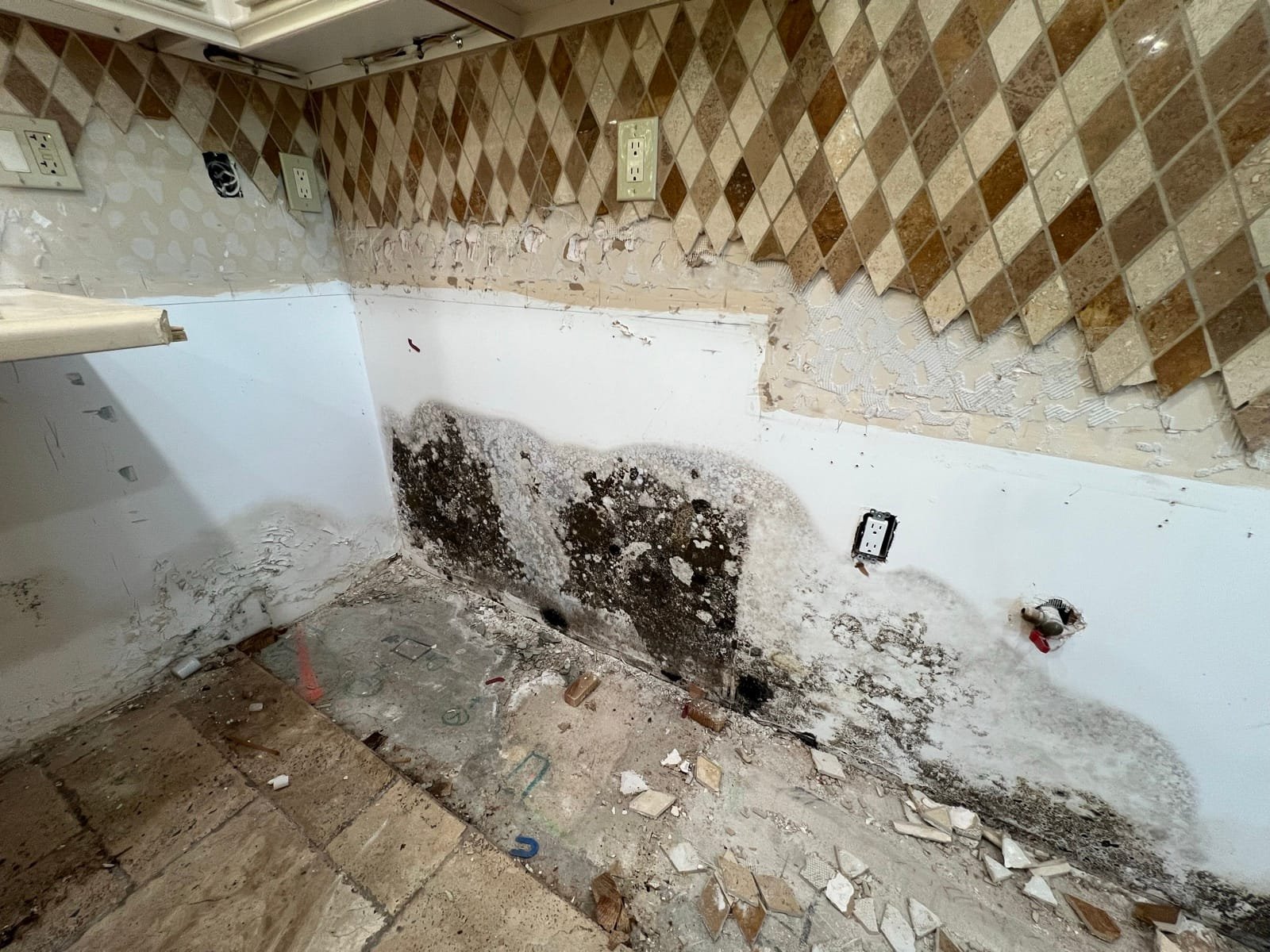
Mold needs three things: moisture, something to grow on, and time. In a house, the first one is the only one you can control. That’s why every mold problem is really a water problem.
I’m Igor, the owner of FastFix Restoration. Here is what we look for, what we find, and what to do about it.
Signs of mold in a house
- A musty smell, especially in one room, a closet or under a sink
- Spots or stains on walls, ceilings, grout or the back of cabinets
- Paint that bubbles, peels or looks wet
- A wall or floor that feels soft or cool to the touch
- A past leak that was “fixed” but never dried out
- Allergy-like symptoms that get better when you leave the house
Where mold hides
The mold you can see is often the small part. The rest is where water sat and nobody looked:
- Behind kitchen and bathroom cabinets. Slow leaks from supply lines, dishwashers and refrigerator lines.
- Inside walls under bathrooms and laundry rooms. Shower pans, tub drains and washer hoses.
- In crawl spaces and under the house. Common in the hills after heavy rain.
- In attics. Roof leaks and bathroom fans that vent into the attic.
- In closets on outside walls. Cold walls, no air movement, condensation.
We check these with a moisture meter and a thermal camera before we open anything, so we open only what’s wet.
How fast mold grows
Mold can start growing within 24 to 48 hours on wet materials. That’s why drying fast after a leak matters more than anything else. A leak that is dried properly in the first days usually doesn’t turn into a mold job. A leak that is left wet for a week or two usually does.
Is black mold more dangerous?
The color of mold doesn’t tell you how dangerous it is. Many molds are black or green. You don’t need to know the exact species to decide what to do: if mold is growing in your house, it should be removed and the moisture source fixed, whatever its color.
Mold and your health
Mold can cause allergy symptoms: stuffy nose, itchy eyes, coughing, wheezing, skin irritation. People with asthma, allergies, weak immune systems, small children and older adults are more sensitive. If you have health concerns, talk to your doctor. Our job is to find the source, remove the mold and verify the result.
Can you clean mold yourself?
For a small area, about the size of a doormat (roughly 10 square feet) on a hard surface like tile or a sink, you can usually clean it yourself: wear gloves and a mask, scrub with detergent and water, and dry it completely.
Call a professional when:
- The area is bigger than that
- It’s inside a wall, under a floor, in the HVAC or in a crawl space
- It came from sewage or contaminated water
- It keeps coming back after you clean it
- Someone in the house has health problems
- You need documentation for insurance or for selling the house
Don’t use bleach on drywall or wood. It doesn’t reach the mold inside the material, and the water in it feeds the mold. And don’t paint over mold. It comes back through the paint.
What real mold remediation looks like
- Find and fix the moisture source. Without this, nothing else lasts.
- Contain the area. Plastic walls and negative air pressure with HEPA air scrubbers, so spores don’t spread to the rest of the house.
- Remove what can’t be cleaned. Moldy drywall, insulation and carpet come out under containment.
- Clean what can be saved. Framing and hard materials are HEPA vacuumed and cleaned. We don’t replace what can be saved.
- Dry everything before anything is closed up.
- Verify. Air samples inside and outside the home go to an independent lab. When the project calls for independent clearance testing, an independent inspector does it.
This follows the IICRC S520 standard for mold remediation. Fogging the house is not mold removal. More about that in why dry fogging doesn’t work.
Real jobs
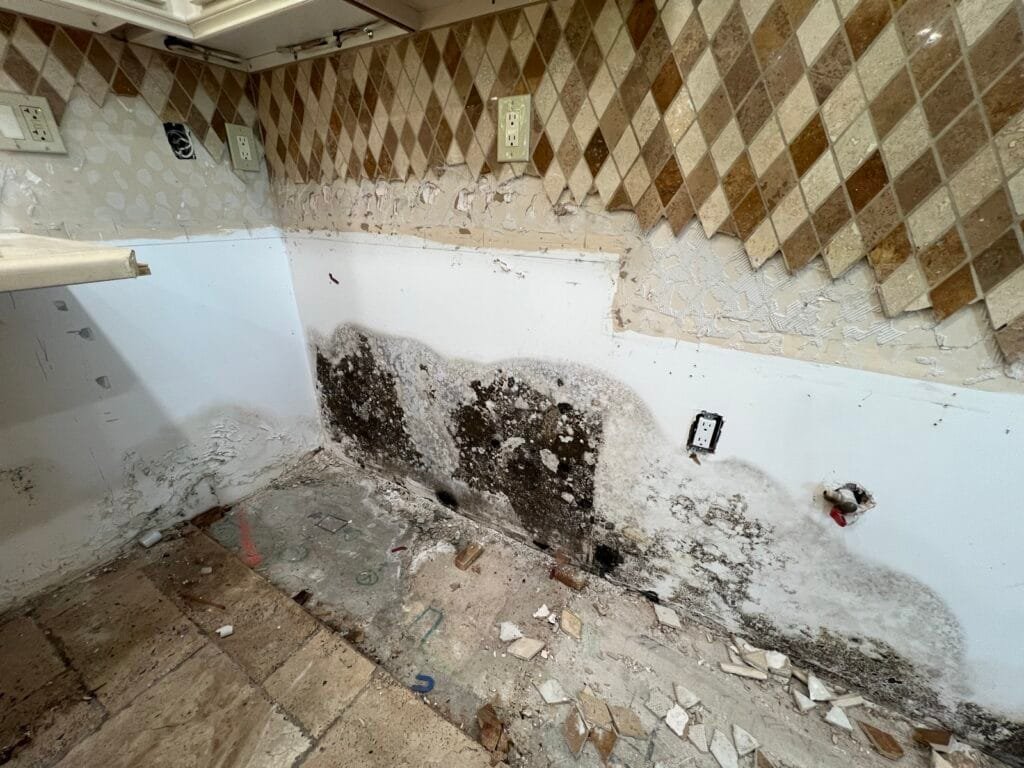
Mold behind the kitchen cabinets, Encino. The owners had just bought the house, and we found moisture behind the kitchen wall. When the cabinets came off, there was a lot of mold behind them. We set up containment and HEPA filtration, removed what couldn’t be cleaned, and cleaned the rest.
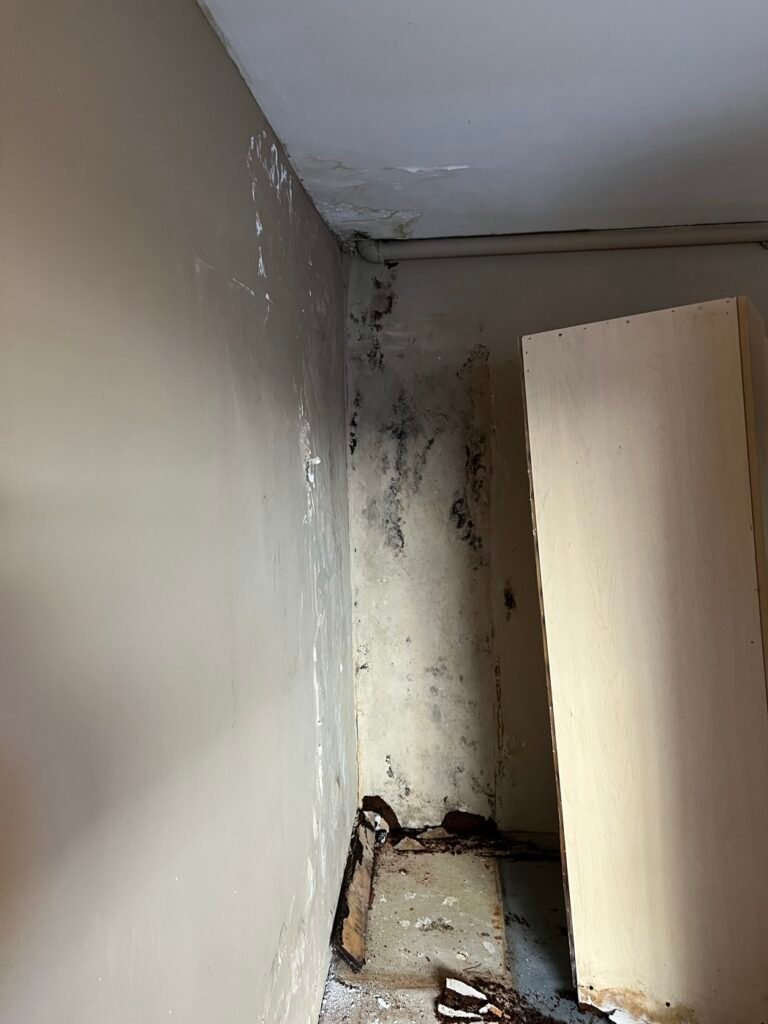
A neighbor’s leak, Sherman Oaks. Water from a neighbor’s leak got into the wall. By the time it was found, mold had grown in the corner of the room. We documented the source and the damage for a liability claim, set up containment and removed the affected materials.
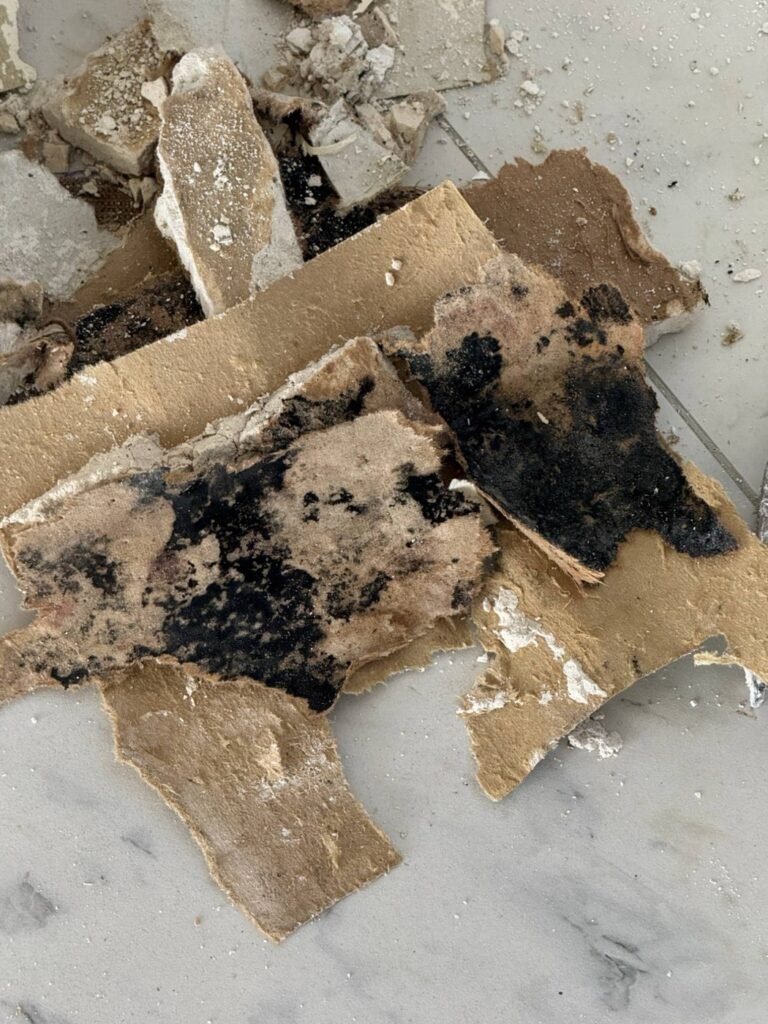
A jacuzzi drain leak, Malibu. A jacuzzi drain on the second floor leaked into the first floor. Behind the drywall, the leak had already caused mold. The affected drywall was removed under containment. After remediation we took air samples inside and outside the home and sent them to an independent lab.
Wood-destroying fungus, Studio City. A bathroom investigation turned up Poria, a fungus that had gotten into the structural framing. We removed the affected materials and cleaned the area for reconstruction. It took about two weeks.
After a flood or a big leak
- Stop the water and call right away. The first 48 hours matter most.
- Take photos before you move or throw away anything.
- Don’t close up walls or put flooring back until the materials read dry on a moisture meter.
- Keep the HVAC off in the wet area until it’s checked.
Mold and insurance
Mold caused by a sudden leak, like a burst pipe, is often part of a water damage claim. Mold from a slow leak or long-term moisture often is not. Your carrier decides what is covered. What helps is quick action and a clear record of the source, the damage and the readings. We work directly with your insurance company and document everything.
If you think you have mold, we do free on-site inspections across Los Angeles. Call 24/7: (818) 717-7431. More about our mold removal and remediation.
Igor, Owner, FastFix Restoration
IICRC Master Water and Mold Restorer · CSLB #1083206